
The Chip Shortage Isn't Ending — It Runs Past 2027
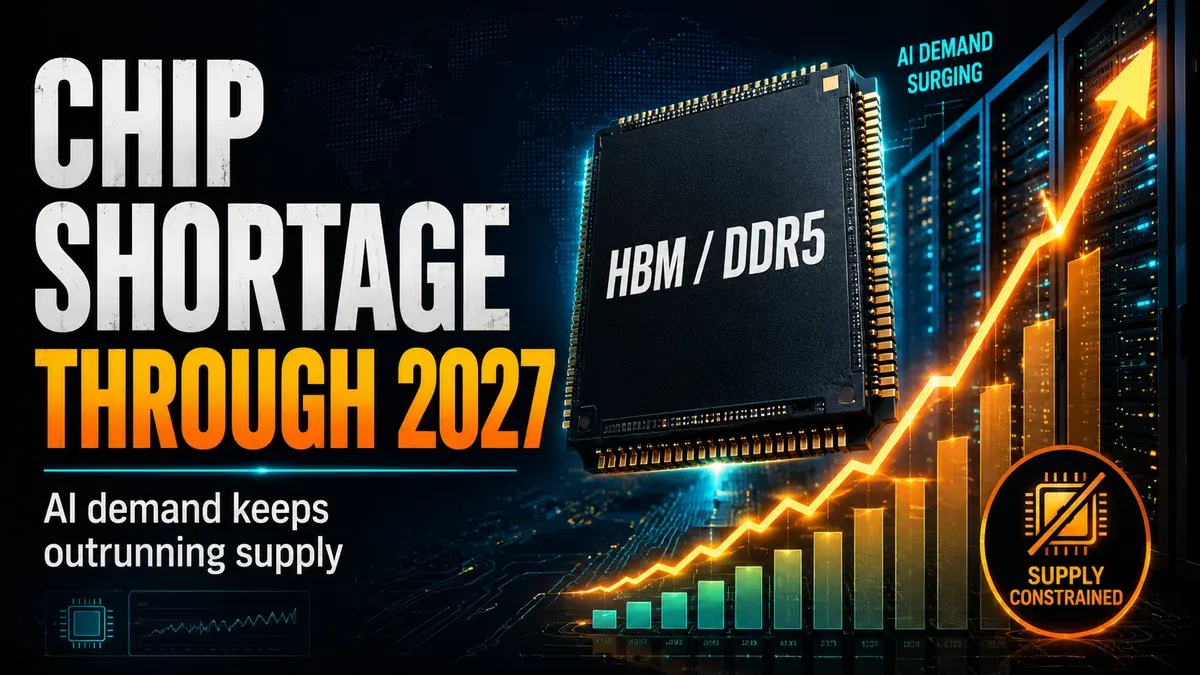
TL;DR — Micron shares jumped after the company signaled the chip shortage is now projected to last beyond 2027, with memory demand from AI outrunning supply. While headlines fret about an AI bubble, the hardware underneath is telling a tighter, more bullish story: not enough chips, for longer than expected.
There are two AI stories running at the same time, and they don't agree. One is the market's bubble anxiety — stretched valuations, nervous selloffs, talk of overbuilding. The other is what's actually happening on the factory floor, and this week Micron put a number on it. Shares jumped as the chip shortage was projected to last beyond 2027, per The Wall Street Journal, with the company's earnings surging more than tenfold this year on relentless AI-driven demand for memory.
So what? This is the bull case made concrete. AI models don't just need fast processors — they need enormous amounts of high-bandwidth memory to feed them, and that memory is exactly what's in short supply. When a supplier like Micron says the shortage stretches years into the future, it's saying demand is so far ahead of supply that even aggressive factory expansion won't close the gap soon. Shortages mean pricing power. Pricing power means fat margins. Fat margins are why the stock popped.
For investors, this reframes the whole "is AI overbuilt?" debate. A bubble is when capacity races ahead of demand. A multi-year shortage is the opposite problem — demand racing ahead of capacity. Both can't be the dominant truth for the same component. If memory really is sold out through 2027, the companies making it are looking at a long runway of strong pricing, regardless of how jittery the broader market feels.
| The bubble story | The shortage story |
|---|---|
| Too much AI capacity, too fast | Not enough chips, for years |
| Valuations ahead of reality | Demand ahead of supply |
| Risk: a pop | Risk: missing the cycle |
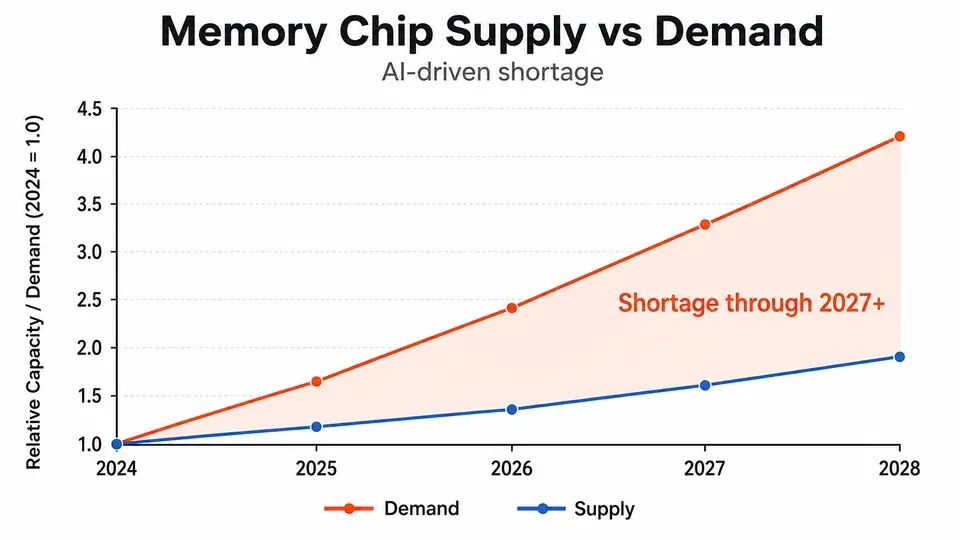
There's a catch every chip investor knows in their bones: semiconductors are brutally cyclical. Memory especially has a long history of boom and bust — shortages trigger massive investment in new factories, that new capacity floods the market a couple of years later, and prices collapse. Today's "shortage beyond 2027" is genuinely bullish, but it also plants the seed of the next glut. The smart money watches for the moment everyone finishes building.
For the rest of us, the chip shortage isn't an abstraction. It feeds into the price and availability of everything from data-center services to consumer electronics. When memory is scarce and expensive, the cost of running AI stays high — which is part of why the companies deploying AI (and the OpenAIs of the world) are so guarded about their margins. The shortage is the hidden tax on the entire AI boom.
The honest read: one company's forecast is a data point, not gospel, and Micron has an obvious incentive to sound confident about demand for its own product. But it lines up with everything else we're seeing — AI compute demand that just won't quit. When the people who actually make the scarce thing say it'll stay scarce for years, that's worth more than another round of valuation arguments.
Bottom line: While the market argues about whether AI is a bubble, the chipmakers are quietly sold out through 2027 — and that's the most bullish thing in the whole debate.
Sources: Yahoo Finance, Fortune, TechSpot, June 24–28, 2026
Tags: #Markets #Semiconductors #Micron #Investing #Tech


Comments ()