Trump Accounts Explained: The Free $1,000 for Newborns, the $5,000 Cap, and How It Really Compares to a 529
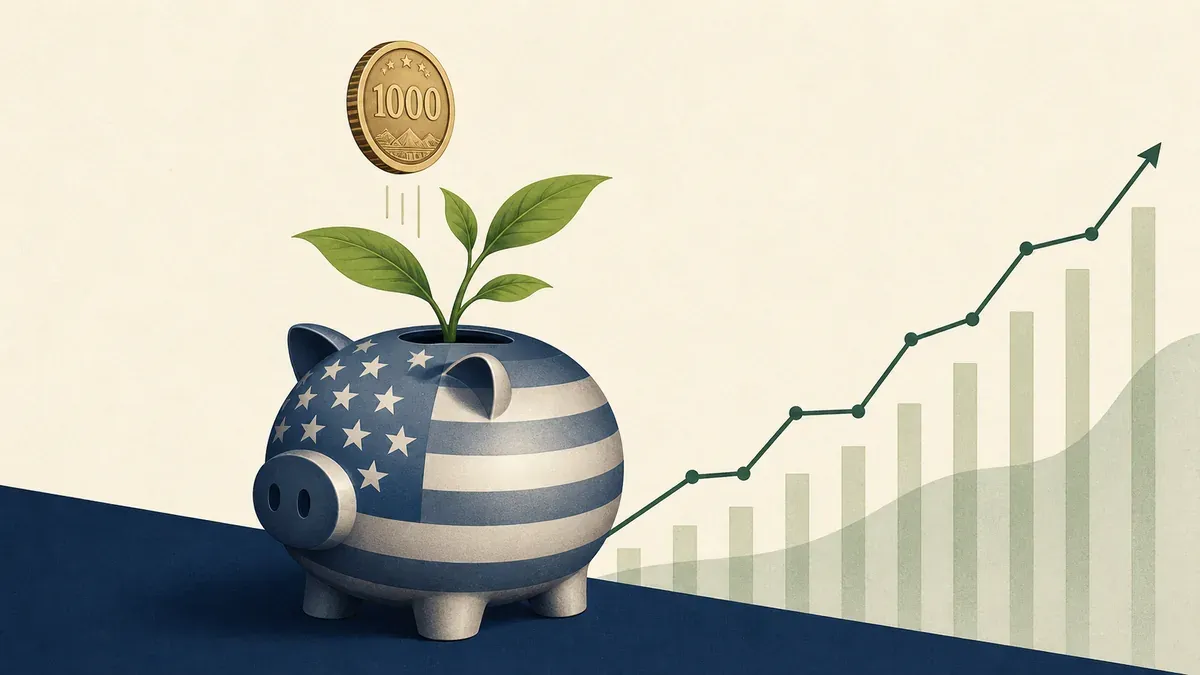
Starting July 4, 2026, the U.S. government will seed a $1,000 investment account for babies born 2025–2028. Families can add up to $5,000 a year, invested in an S&P 500 index fund and locked until 18. The free money is real — but the tax treatment is closer to a traditional IRA than a Roth, and for many families a 529 or custodial Roth still wins. Here's the honest math.
"Trump Accounts" launched on July 4, 2026 as the headline personal-finance feature of the Working Families Tax Cuts. The pitch is simple and genuinely appealing: a $1,000 head start, invested in the stock market, for every eligible American newborn. But a free grand comes with rules — who qualifies, how much you can add, what it's invested in, and crucially how it's taxed when the money finally comes out. This guide lays out the mechanics and then does the comparison the marketing skips: is it actually better than the accounts you already had?
The rules, in plain numbers
Here's what's confirmed in Treasury/IRS guidance and the launch coverage:
| Feature | Trump Account |
|---|---|
| Government seed | $1,000, one-time, for children born Jan 1, 2025 – Dec 31, 2028 |
| Eligibility | Under 18, U.S. citizen, valid Social Security Number |
| Annual contributions | Up to $5,000/year (seed doesn't count toward this) |
| Employer contributions | Up to $2,500/year (counts within the $5,000 cap; not taxed as income to you) |
| Tax on contributions | After-tax — no deduction |
| Investments (under 18) | Only low-cost ETFs/mutual funds tracking a broad U.S. equity index (e.g., S&P 500). No bonds, no international |
| Access | Locked until the first day of the year the child turns 18 |
| At 18 | Converts to a traditional IRA |
| Withdrawals | Growth is tax-deferred; withdrawals taxed as ordinary income; 10% penalty before 59½ (with exceptions) |
Two details drive everything downstream. First, contributions go in after-tax but the account behaves like a traditional IRA on the way out — meaning your gains are taxed as ordinary income later. Second, the only investment allowed while the child is a minor is a broad U.S. index fund. That's a reasonable default, but it's a narrow one.
What the money could actually grow to
The seed alone is modest but not nothing. Assuming a long-run ~7% annual return:
| Scenario (7% return) | Value when child turns 18 |
|---|---|
| $1,000 seed only | ~$3,380 |
| $1,000 seed + $1,000/year | ~$37,400 |
| $1,000 seed + $5,000/year (max) | ~$173,000 |
So the free $1,000 roughly triples on its own by 18 — real, but small. The account only becomes meaningful if families actually fund it, and at that point the tax treatment matters a lot.
The catch the marketing skips: it's taxed like a traditional IRA
This is where you have to think, not just take the free money. Because a Trump Account converts to a traditional IRA, your investment growth is taxed as ordinary income whenever it's eventually withdrawn (and hit with a 10% penalty if that's before 59½, outside qualifying exceptions).
Compare that to the alternatives most families already have access to:
| Account | Free seed? | Growth taxed? | Earned income required? | Best for |
|---|---|---|---|---|
| Trump Account | Yes ($1,000) | Deferred, then ordinary income | No | Capturing the free seed; no-earned-income kids |
| Custodial Roth IRA | No | Tax-free in and out | Yes (child must have earned income) | Kids with real earnings — best tax deal |
| 529 Plan | No | Tax-free for education | No | Education savings; higher limits; can roll to Roth |
| UTMA/UGMA custodial | No | Taxable each year | No | Flexibility — any use, no restrictions |
The uncomfortable conclusion: on tax efficiency alone, a Trump Account is usually the worst of the bunch, because Roth and 529 offer tax-free growth while the Trump Account defers tax and then charges ordinary income. What the Trump Account uniquely offers is (a) the free $1,000 and (b) no earned-income requirement — which matters, because a custodial Roth is off-limits to a baby or young child with no job.
So how should a family actually use it?
A sensible playbook, given the trade-offs:
- Take the free $1,000 regardless. It costs nothing and triples over 18 years. There's no reason to leave it on the table.
- Don't rush to max it out ahead of better accounts. If your goal is education, a 529 gives tax-free growth and higher limits. If your child has real earned income (a teen with a summer job), a custodial Roth is the superior long-term vehicle.
- Fund the Trump Account when the better buckets are full or don't apply — for example, a young child with no earned income, once you've captured 529 benefits you need.
- Mind the lock-up and the penalty. Money is inaccessible until 18 and then sits in a traditional-IRA wrapper with a 10% early-withdrawal penalty before 59½. This is a retirement-flavored account, not a college or "give it to them at 18" account.
Think of it as a free starter deposit with mediocre tax plumbing. Grab the seed, understand the strings, and don't let a patriotic launch date talk you out of the more tax-efficient accounts that already exist.
Frequently Asked Questions (FAQ)
Is the $1,000 really free? Yes — for eligible children born 2025–2028, the government deposits $1,000 once a parent opens the account. It doesn't count against the $5,000 annual contribution cap.
Can grandparents or employers chip in? Yes. Total contributions are capped at $5,000/year. Employers can add up to $2,500 (which isn't taxed as your income but counts inside that $5,000 limit).
Why is a 529 or Roth often better? Both offer tax-free growth (529 for education, Roth for anything in retirement), while the Trump Account defers tax and then taxes withdrawals as ordinary income. On taxes, the Trump Account generally loses.
What can the money be invested in? While the child is under 18, only low-cost funds tracking a broad U.S. stock index like the S&P 500 — no bonds or international funds until they turn 18.
When can the child touch the money? Not until the first day of the year they turn 18, when it converts to a traditional IRA. Withdrawing before 59½ generally triggers income tax plus a 10% penalty (with some exceptions).
Should I skip my 529 to fund this instead? Usually no. If education is the goal, the 529's tax-free growth and higher limits make it the stronger choice. Use the Trump Account for the free seed and for situations the other accounts don't cover.
Key Takeaways
- Trump Accounts give a free $1,000 to U.S. newborns born 2025–2028, launched July 4, 2026.
- Families can add up to $5,000/year (employers up to $2,500 within that cap), invested only in a broad U.S. index fund until 18.
- The account converts to a traditional IRA — growth is tax-deferred, then taxed as ordinary income, with a 10% penalty before 59½.
- On tax efficiency it usually trails a 529 (education) and a custodial Roth (for kids with earned income).
- Smart move: take the free $1,000, but prioritize more tax-efficient accounts before maxing this one out.
References
CNBC (Jul 1, 2026): "Trump Accounts for kids launch July 4: What parents need to know" — https://www.cnbc.com/2026/07/01/trump-accounts-launch-july-4.html - IRS: "Treasury, IRS issue guidance on Trump Accounts established under the Working Families Tax Cuts" — https://www.irs.gov/newsroom/treasury-irs-issue-guidance-on-trump-accounts-established-under-the-working-families-tax-cuts-notice-announces-upcoming-regulations - NerdWallet: "Trump Accounts for Kids Open July 4: How Do They Stack Up?" — https://www.nerdwallet.com/investing/learn/1000-trump-accounts - Chase: "Trump Accounts for Kids, Explained: Complete Guide for Parents" — https://www.chase.com/personal/investments/learning-and-insights/article/trump-accounts-for-kids-considerations-for-parents



Comments ()