How Close Is China to US AI? A 2.7-Point Gap on 23x Less Money
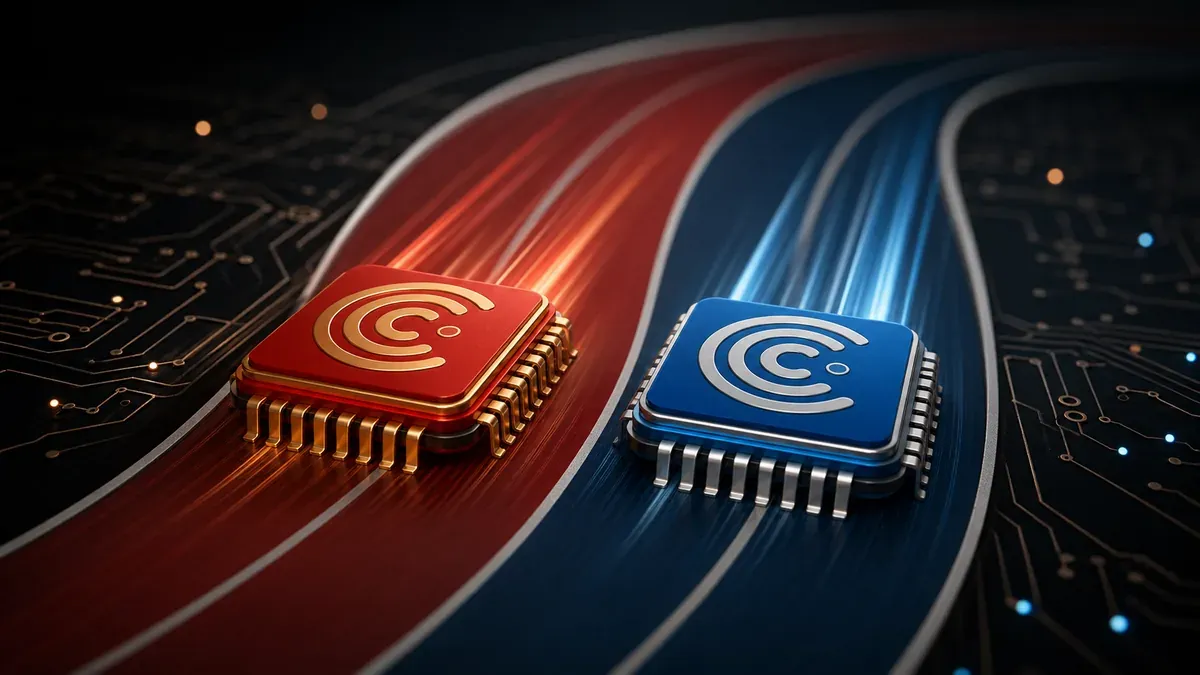
The gap between the best US and best Chinese AI models has narrowed from roughly 30 points in 2023 to about 2.7 percentage points in 2026, according to Stanford's AI Index — and China closed most of that distance while spending an estimated 23 times less on AI. But "catching up on a benchmark" and "catching up at the true frontier" are two different questions, and the honest answer depends on which one you're asking. Here's the data both sides actually cite.
Every few weeks a headline swings between "China has caught up" and "China is still years behind." Both camps are quoting real numbers — they're just measuring different things. This piece pulls the two views into one place: how small the measured gap has become, why serious analysts still argue the frontier lead is intact, and what the efficiency story means for anyone using or investing in AI.
Two numbers that frame the whole debate
Start with the figure that shocked people: according to Stanford HAI's 2026 AI Index, the performance gap between the top US and top Chinese models on major benchmarks shrank to just 2.7 percentage points, down from a range of 17.5 to 31.6 points in May 2023. On the scoreboards most people cite, the race is nearly even.
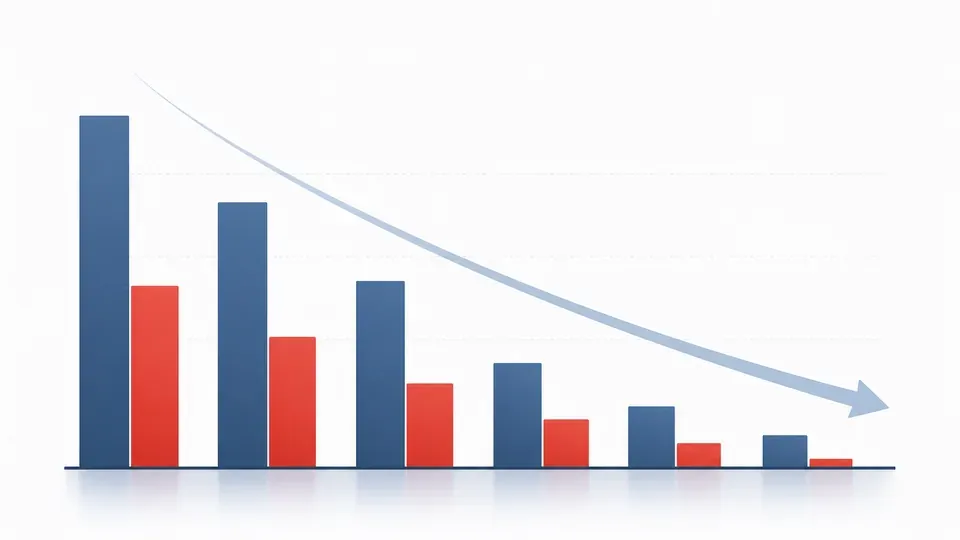
Now the second number. The US spent an estimated $285.9 billion on private AI investment in 2025 versus China's $12.4 billion — roughly 23x more. So one side spent an order of magnitude more money and ended up less than three points ahead on the benchmarks. That efficiency gap is the real story, and it's why the "DeepSeek shock" narrative refuses to die.
There's a third data point that matters for developers: Chinese labs now hold four of the top five positions in open-weight AI — GLM-5 (Zhipu AI), Qwen3.5 (Alibaba), Kimi K2.5 (Moonshot AI), and DeepSeek V4 — each leading in different capability dimensions. If your work depends on models you can download and run yourself, the center of gravity has already shifted east.
## But "catching up on benchmarks" isn't "catching up at the frontier"
Here's where the other camp has a point. When DeepSeek released V4, its first new-architecture model since R1 in January 2025, analysts at CSIS argued it "is not competitive with frontier U.S. models" — likely the best open-source option available, but not evidence that Chinese firms are closing the gap at the actual cutting edge. DeepSeek itself has acknowledged that its models trail state-of-the-art frontier systems by approximately 3 to 6 months, with some estimates putting the US frontier lead closer to seven months.
The distinction that resolves the argument:
- Open-weight leadership — models anyone can download and run. Here China is arguably ahead.
- Closed frontier capability — the single most capable model in existence, usually a US closed system. Here the US still leads, if narrowly.
Both statements are true at once. "China leads open-weight AI" and "the US still holds the frontier" are not contradictions — they describe different tiers of the same market.
US frontier vs. Chinese challengers, side by side
| US frontier labs | Chinese challengers | |
|---|---|---|
| Most capable single model | Leads (narrowly) | ~3–6 months behind |
| Open-weight leadership | Fewer top open models | 4 of top 5 open-weight slots |
| 2025 private AI investment | ~$285.9B | ~$12.4B |
| Benchmark gap (2026) | baseline | 2.7 points behind |
| Cost per output token | Higher | Much lower (see below) |
| Compute access | Full Nvidia stack | Export-restricted, adapting |
The table makes the trade-off legible: the US buys the frontier with money and unrestricted compute; China buys efficiency and openness under constraints.
The efficiency story: near-frontier at a fraction of the cost
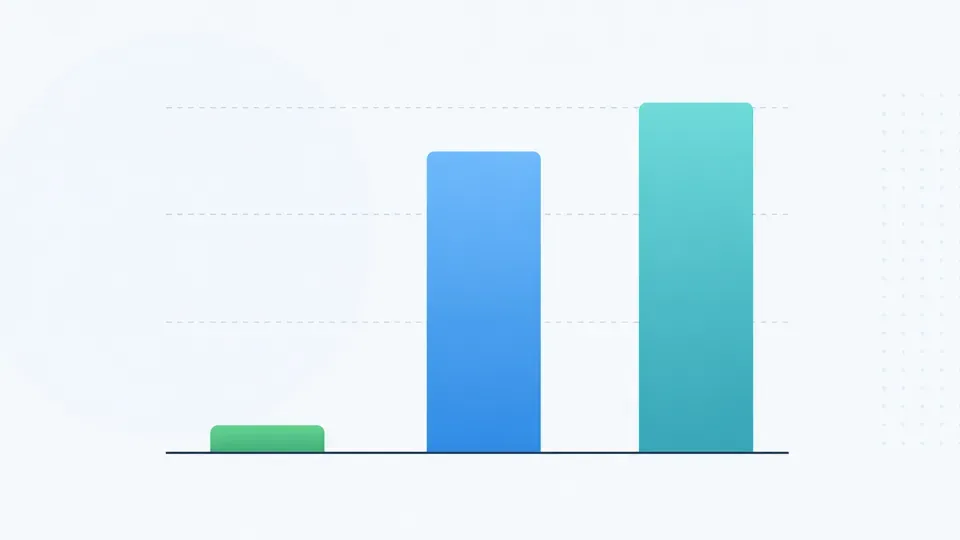
The number that makes CFOs pay attention is price. By reported pricing, DeepSeek V4-Pro costs around $3.48 per million output tokens versus roughly $25 for Claude Opus 4.7 and $30 for GPT-5.5 — close to a 7x price advantage — while landing within 1–3% of frontier models on coding benchmarks. For a company running millions of API calls a day, "within a few points" at one-seventh the cost is not a rounding error; it's a budget decision.
Two things drive that efficiency. First, architecture: DeepSeek V4 uses a mixture-of-experts (MoE) design that routes each token through a subset of specialized "expert" networks instead of activating the whole model every time — larger effective capacity without proportional compute cost. Second, necessity: built under US export controls that block access to the most powerful Nvidia GPUs, Chinese labs were pushed toward algorithmic and hardware workarounds. V4 was reportedly trained on Huawei Ascend and Cambricon accelerators rather than Nvidia — notable if it holds, as a frontier-class model built off the Nvidia stack.
## So who's actually winning?
The only honest answer is: it depends on the question.
- "Who has the single most capable model?" — the US, for now, by a shrinking margin.
- "Who leads open-weight AI and capability-per-dollar?" — increasingly China.
- "Who's more efficient under constraints?" — China, clearly, and that's the trend line that should worry the US more than any single benchmark.
The framing that ages badly is treating this as a single finish line. It's not. The US is defending a narrow frontier lead at enormous cost; China is commoditizing the tier just below the frontier and giving it away as open weights. For most real-world users, "the tier just below the frontier, at one-seventh the price, downloadable" is the more disruptive product — which is exactly why the race feels closer than the frontier gap alone suggests.
Frequently Asked Questions (FAQ)
How far behind is China in AI in 2026? On major benchmarks, about 2.7 percentage points behind the best US models per Stanford's 2026 AI Index — down from 17.5–31.6 points in 2023. At the true frontier (the single most capable model), estimates put the lag at roughly 3–6 months.
Did China really spend 23x less? US private AI investment was an estimated $285.9 billion in 2025 versus China's $12.4 billion — about 23x more for the US. The narrow benchmark gap despite that spending difference is the core of the "efficiency" argument.
Are Chinese AI models actually good now? In open-weight AI, yes — Chinese labs hold four of the top five open-weight positions (GLM-5, Qwen3.5, Kimi K2.5, DeepSeek V4). At the closed frontier, US models still lead narrowly.
Why are Chinese models so much cheaper? A mix of mixture-of-experts architecture and efficiency forced by US chip export controls. DeepSeek V4-Pro reportedly runs around 7x cheaper per output token than leading US models while scoring within 1–3% on coding benchmarks.
Does open-weight leadership matter? For developers and enterprises that want to self-host, control costs, or avoid vendor lock-in, yes — it's often more relevant than who holds the absolute frontier.
Key Takeaways
- The US–China AI benchmark gap has narrowed to about 2.7 points in 2026, from ~30 points in 2023 (Stanford AI Index).
- China closed most of that distance spending an estimated 23x less — $12.4B vs the US's $285.9B in 2025.
- China leads open-weight AI (4 of top 5 slots); the US still holds the closed frontier, but only by a reported 3–6 months.
- Chinese open models like DeepSeek V4-Pro run roughly 7x cheaper per token while scoring within 1–3% on coding tasks.
- The right question isn't "who's ahead" but "ahead at what" — frontier capability, open weights, or cost-efficiency are three different races.
How this was written AI helped research this piece, but every source, fact, and sentence was checked and finalized by hand.
References
The Next Web: "Stanford AI Index 2026: China narrows US lead to 2.7% while spending 23x less on AI investment" — https://thenextweb.com/news/stanford-ai-index-2026-china-us-performance-gap - CSIS: "What to Know About Chinese AI Models" — https://www.csis.org/analysis/what-know-about-chinese-ai-models - Council on Foreign Relations: "DeepSeek V4 Signals a New Phase in the U.S.-China AI Rivalry" — https://www.cfr.org/articles/deepseek-v4-signals-a-new-phase-in-the-u-s-china-ai-rivalry - The Wire China: "Scoring the AI Race, a Year after the DeepSeek Shock" — https://www.thewirechina.com/2026/03/22/scoring-the-ai-race-a-year-after-the-deepseek-shock/ - MindStudio: "DeepSeek V4 vs US AI Models: The Cost and Capability Gap Explained" — https://www.mindstudio.ai/blog/deepseek-v4-vs-us-ai-models


Comments ()