Is AI Making Us Worse at Thinking? What the '54 Brains' and '319 Workers' Studies Actually Found
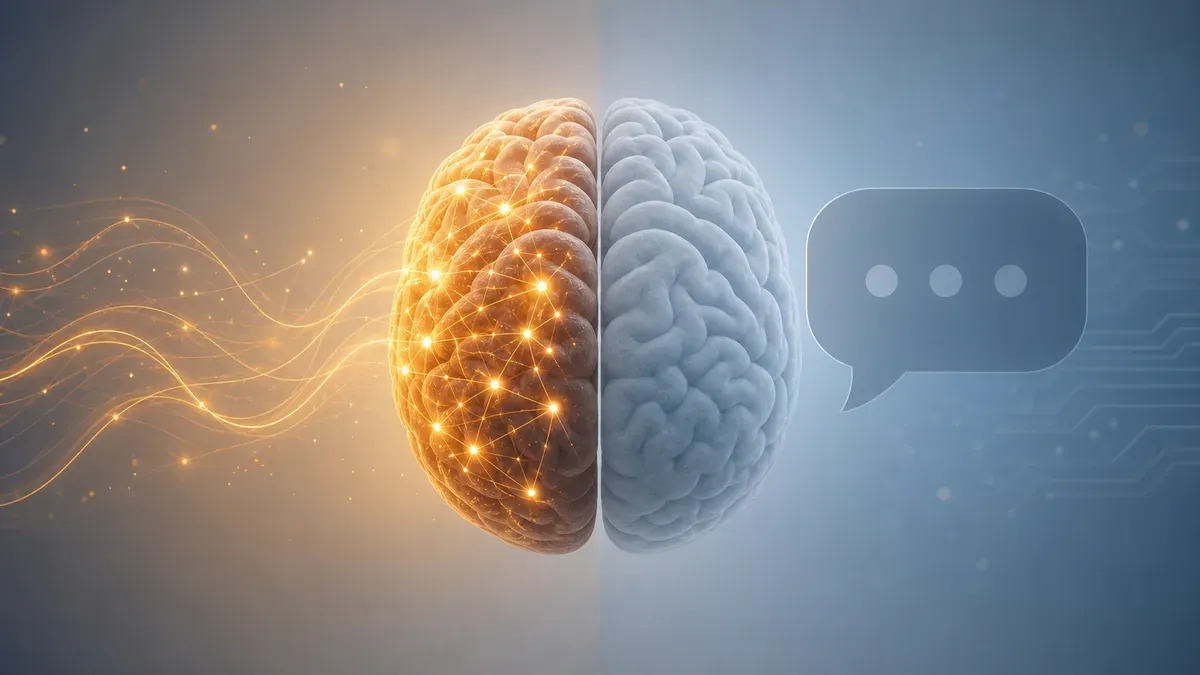
Two of the most-cited studies on AI and the brain — an MIT Media Lab experiment that wired up 54 people's brains and a Microsoft/Carnegie Mellon survey of 319 knowledge workers — do not prove that AI makes you permanently dumber. What they actually show is narrower and more useful: leaning on AI too early lowers mental engagement, and the more you trust the AI, the less you check its work. The fix isn't to quit AI. It's to change when and how you reach for it.
"AI is making us stupid" is one of the most viral tech claims of the past year. It usually points to two studies: MIT's "Your Brain on ChatGPT" and Microsoft's critical-thinking survey. Both are real, both are interesting — and both are routinely misread. This piece does what most hot takes skip: it puts the two studies side by side, separates what they measured from what headlines claimed, and turns the findings into a practical rule for using AI without hollowing out your own skills.
What the two studies actually measured
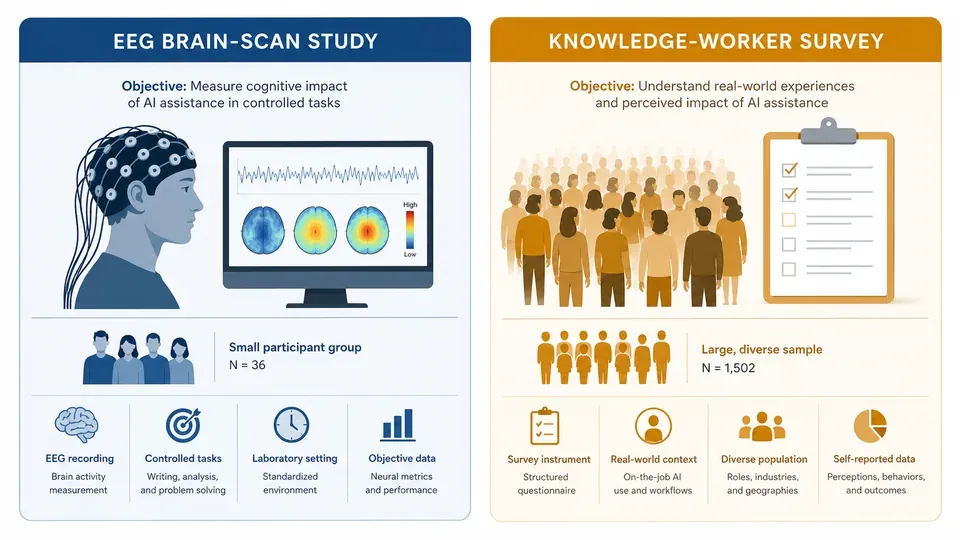
These are very different studies. One is a small brain-activity experiment; the other is a large self-report survey. Confusing them is where most of the bad takes come from.
| MIT Media Lab: "Your Brain on ChatGPT" | Microsoft / Carnegie Mellon survey | |
|---|---|---|
| Method | EEG brain scans during essay writing | Survey of self-reported behavior |
| Sample | 54 participants (18 returned for a 4th session) | 319 knowledge workers, 936 real work examples |
| Setup | 3 groups: ChatGPT, search engine, brain-only | Workers who use GenAI at least weekly |
| Key measure | Neural connectivity + recall of own work | Perceived critical-thinking effort |
| Status | Preprint (not yet peer-reviewed as of mid-2025) | Peer-reviewed, presented at CHI 2025 |
The MIT study is the source of the scary brain imagery. The Microsoft study is the source of the "AI erodes critical thinking" line. They point in a similar direction, but they are not the same claim — and neither is a long-term measurement of intelligence.
## The MIT study: "cognitive debt," not brain damage
In the MIT Media Lab experiment, participants wrote essays while researchers recorded their brain activity with EEG. The group writing with ChatGPT showed the weakest and least distributed brain connectivity; the search-engine group sat in the middle; and the brain-only group showed the strongest engagement. Cognitive activity, in other words, scaled down the more external help people used.
The most striking behavioral detail: LLM users often couldn't accurately quote their own essays minutes after writing them. The words had passed through their hands without passing through memory — the essay was produced, but not really authored in the brain.
The researchers called this "cognitive debt": offloading the hard mental work early leaves you with a weaker internal grasp of the material, a debt you pay later in memory and understanding. Crucially, lead researcher Nataliya Kos'myna publicly pushed back on the viral framing, asking people not to use words like "dumb," "brain rot," or "harm." The study was a preprint on a narrow task (essay writing), with 54 people — not proof of permanent decline.
The Microsoft study: trust is the real variable
The Microsoft/Carnegie Mellon survey approached it from the workplace. Across 936 first-hand examples, knowledge workers reported that GenAI reduced their effort across most cognitive activities — knowledge, comprehension, analysis, synthesis, evaluation.
But the sharpest finding was about confidence, and it cuts both ways:
- Higher confidence in the AI → less critical thinking. When people trusted the tool, they stopped checking.
- Higher confidence in themselves → more critical thinking. People who trusted their own judgment kept scrutinizing the output.
The study also found AI users produced a less diverse set of outcomes for the same task — everyone nudged toward the same AI-shaped answer. And it noted that critical thinking doesn't vanish; it shifts — from producing the answer to verifying, integrating, and stewarding what the AI produced.
That reframing matters. The danger isn't the tool. It's the posture: passive acceptance instead of active supervision.
What this means for how you actually work
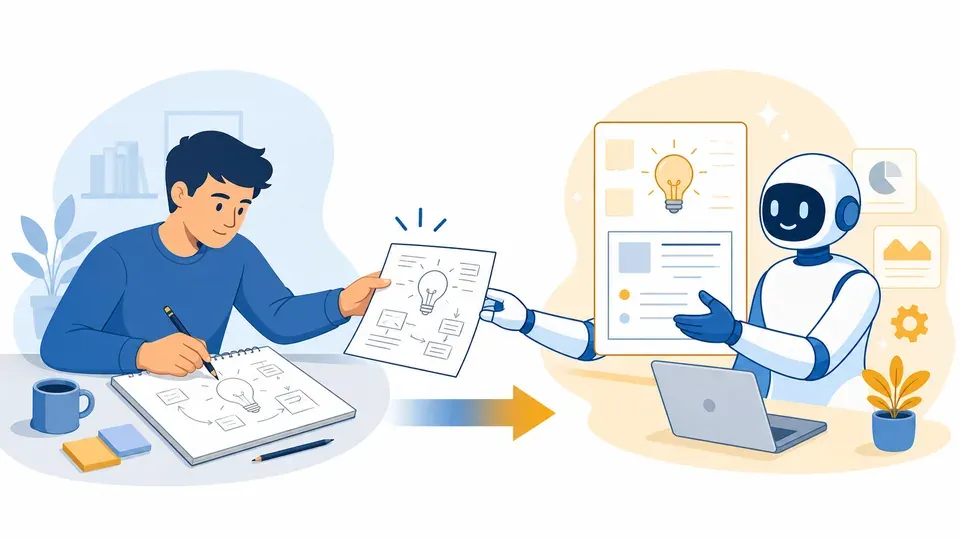
Put the two studies together and a single rule emerges: do the thinking first, then let AI accelerate — not the reverse. The harm shows up when AI substitutes for the effortful early stage (forming ideas, structuring an argument, recalling facts). It's far less concerning when AI speeds up the later stage (drafting, formatting, checking).
A practical playbook:
- Struggle before you prompt. Sketch your own outline or answer first, even badly. The MIT effect hit hardest when AI came before any personal effort. Two minutes of your own thinking buys most of the protection.
- Treat AI output as a draft to interrogate, not an answer to accept. The Microsoft data says trust is the trap. Ask: what did it get wrong, what did it leave out, what would I have said differently?
- Force diversity back in. Since AI narrows outcomes, deliberately generate a second, contrarian version — or write the first pass yourself and use AI only to critique it.
- Protect your "load-bearing" skills. Offload the low-stakes stuff (formatting, boilerplate). Keep doing the reps on the skills that define your value — the reasoning, the judgment, the memory you actually need to own.
The distinction isn't "AI good" or "AI bad." It's cognitive offloading vs. cognitive outsourcing: using AI to extend your thinking keeps you sharp; using it to replace your thinking is what runs up the debt.
## Frequently Asked Questions (FAQ)
Does the MIT study prove ChatGPT lowers your IQ? No. It measured brain connectivity during a single essay-writing task in 54 people, and it was a preprint not yet peer-reviewed as of mid-2025. It shows reduced engagement and worse recall in that setting — not a permanent drop in intelligence.
Is AI always bad for learning? No. Both studies point to timing and trust, not the tool itself. AI used after you've done the initial thinking, and treated as output to verify rather than accept, shows far less of the negative effect.
What is "cognitive debt"? The MIT researchers' term for the cost of offloading hard mental work too early: you get the finished product but a weaker internal grasp, which shows up later as poorer memory and understanding.
Why does confidence matter so much? The Microsoft study found that trusting the AI more led to less critical thinking, while trusting your own judgment led to more. Over-trust is the mechanism that turns a helpful tool into a crutch.
How do I use AI without dulling my skills? Do a rough version yourself first, treat AI output as a draft to challenge, generate an alternative to fight answer-sameness, and keep practicing the core skills your work depends on.
Key Takeaways
- The two headline studies — MIT's 54-person EEG experiment and Microsoft's 319-worker survey — are real but routinely oversold; neither measures long-term intelligence.
- MIT found weaker brain engagement and poorer recall when AI did the work early; researchers called it "cognitive debt," not brain damage.
- Microsoft found the key variable is trust: high confidence in AI means less checking, while confidence in yourself means more.
- AI also narrows the diversity of answers, and shifts critical thinking toward verifying and supervising output.
- The practical rule: think first, then accelerate with AI — offload low-stakes tasks, but never outsource the reasoning your skills depend on.
How this was written AI helped research this piece, but every source, fact, and sentence was checked and finalized by hand.
References
MIT Media Lab: "Your Brain on ChatGPT: Accumulation of Cognitive Debt when Using an AI Assistant for Essay Writing Task" — https://www.media.mit.edu/publications/your-brain-on-chatgpt/ - Microsoft Research: "The Impact of Generative AI on Critical Thinking: Self-Reported Reductions in Cognitive Effort and Confidence Effects From a Survey of Knowledge Workers" — https://www.microsoft.com/en-us/research/publication/the-impact-of-generative-ai-on-critical-thinking-self-reported-reductions-in-cognitive-effort-and-confidence-effects-from-a-survey-of-knowledge-workers/ - TIME: "ChatGPT May Be Eroding Critical Thinking Skills, According to a New MIT Study" — https://time.com/7295195/ai-chatgpt-google-learning-school/ - Forbes: "How AI Changes Critical Thinking: New Microsoft Research Findings" — https://www.forbes.com/sites/charlestowersclark/2025/03/14/how-ai-changes-critical-thinking-new-microsoft-research-findings/



Comments ()