$725 Billion in Capex: Why AI Money May Rotate From Chipmakers to Hyperscalers

Morgan Stanley told clients this week that the recent wobble in US chip stocks may be the start of AI money broadening out — rotating from chipmakers toward the hyperscalers (Microsoft, Amazon, Alphabet, Meta) that are about to spend a combined ~$725 billion on capex in 2026. The logic hinges on one uncomfortable fact: the companies buying all those chips still haven't clearly proven the spending pays off. Here's what the rotation thesis actually says, and why "capex discipline" cuts both ways.
For two years the simplest AI trade was "own the picks and shovels" — the chipmakers arming everyone else. That trade worked spectacularly. Now a major bank is arguing the baton may pass to the buyers of those chips. This piece breaks down the rotation call, the capex numbers underneath it, and the catch that makes it more interesting than a simple "sell chips, buy clouds."
The call: leadership is broadening, not collapsing
Morgan Stanley's framing is important: recent weakness in US semiconductor stocks is read not as an AI top, but as a sign that market gains are broadening. Instead of a handful of chip names carrying the index, the bank expects investors to rotate toward AI hyperscalers — plus consumer discretionary, transport, and biotech shares.
The rationale is about return on investment. Alphabet, Amazon and the rest have committed enormous sums to AI infrastructure, which sent chip stocks soaring — but clear evidence that AI products generate returns justifying that spend is, in the bank's words, yet to be seen. Morgan Stanley expects "more capex discipline in the near-term," and notes hyperscaler stocks have already been through their own period of underperformance. Translation: the chip names have priced in a lot of good news; the platform companies may have more room.
Why chips led first — and why that trade may be maturing
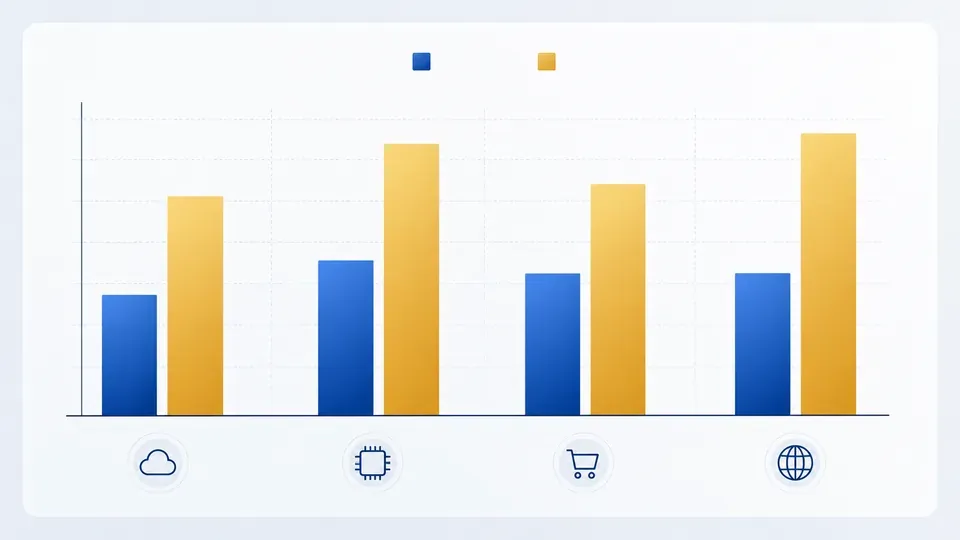
The sequence makes sense. When a gold rush starts, the shovel sellers get paid first and most visibly. Chipmakers booked real revenue from real orders while the AI applications were still experiments. But that also means the chip trade is the one most fully "priced" for continued hypergrowth — and the most exposed if buyers slow down.
| Chipmakers (picks & shovels) | Hyperscalers (platform owners) | |
|---|---|---|
| Revenue timing | Paid first — booked on hardware orders | Monetization comes later, via products |
| What's priced in | A lot of future growth already | Recently underperformed, per MS |
| Key risk | Buyers cutting orders (capex discipline) | Capex outrunning AI revenue |
| Upside driver | More data-center buildout | Proving AI products earn their keep |
| Exposure to a slowdown | High — concentrated in one line item | Diversified across ads, cloud, commerce |
The asymmetry is the point: chipmakers live or die on the buildout continuing at full speed, while hyperscalers have other businesses cushioning them and stand to benefit if their AI bets finally convert.
## The $725 billion question: capex discipline cuts both ways
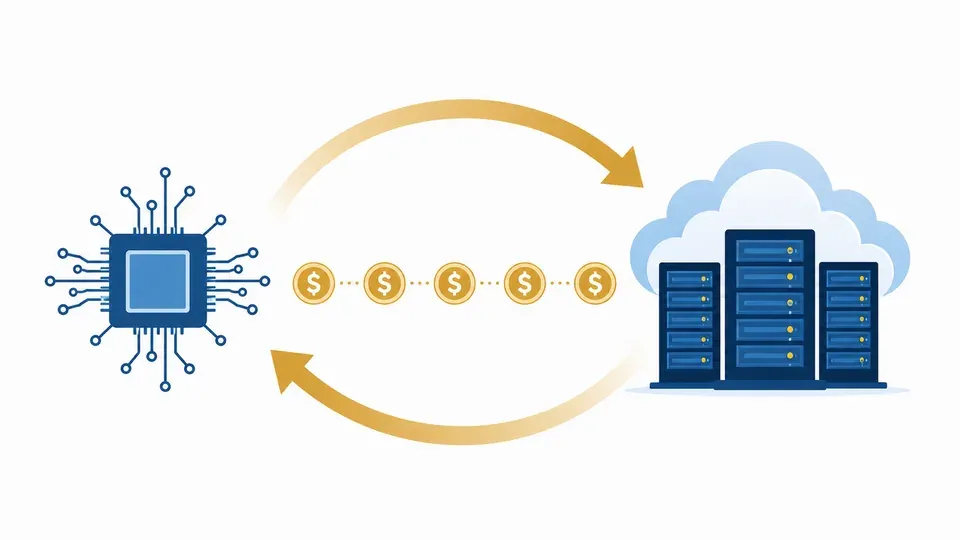
Here's the number that makes this a real debate. Google, Amazon, Microsoft and Meta alone plan to spend a combined ~$725 billion on capex in 2026 — up a staggering 77% from 2025's ~$410 billion. Roughly 75% of that is AI-related infrastructure, on the order of ~$450 billion. Include Oracle and the five largest hyperscalers are on track for somewhere between $700 billion and $900 billion.
The company-by-company jump is stark:
| Company | 2025 capex | 2026 capex (planned) |
|---|---|---|
| Amazon | ~$125B | ~$200B |
| Alphabet | ~$91B | ~$175–185B |
| Meta | ~$72B | ~$115–135B |
| Microsoft | ~$90B | ~$110–120B |
Now the twist that most "just rotate into clouds" takes miss. Every dollar of hyperscaler capex is a dollar of chipmaker revenue. So if hyperscalers exercise the "capex discipline" Morgan Stanley expects — spending more carefully to protect their own margins — that is good for hyperscaler earnings and bad for chipmaker orders at the same time. The rotation isn't two independent bets; it's one mechanism. Discipline by the buyers is exactly what would hurt the sellers and help the buyers' stocks.
That also explains the ROI anxiety underneath the whole call: AI capex has been rising faster than AI revenue, and markets are starting to reprice that gap. A rotation toward hyperscalers is partly a bet that the buildout phase is maturing into a "show me the returns" phase — which rewards whoever can actually monetize, not whoever sells the most hardware.
## What "rotation" does and doesn't mean
A few guardrails, because rotation calls get over-read:
- It's not "AI is over." Morgan Stanley frames it as broadening — more names participating, not fewer. Total AI spend is still rising sharply.
- It's a relative call, not a crash call. "Hyperscalers may outperform chipmakers from here" is different from "chip stocks will fall."
- It's one bank's view at one moment. Rotations are notoriously early or wrong; the ROI question it hinges on ($450B in AI capex vs still-unproven AI product returns) is genuinely unresolved.
The useful takeaway isn't "sell chips, buy clouds." It's the mental model: as an infrastructure boom matures, value tends to migrate from the sellers of shovels to the operators who turn the buildout into products people pay for — if they can. Whether the hyperscalers actually close their own capex-to-revenue gap is the question that decides whether this rotation is right.
Frequently Asked Questions (FAQ)
What did Morgan Stanley actually say? That recent weakness in US chip stocks signals market leadership broadening, with investors likely to rotate toward AI hyperscalers (plus consumer discretionary, transport, biotech), expecting "more capex discipline in the near-term."
What is a hyperscaler? A tech company operating massive data-center infrastructure — here, mainly Microsoft, Amazon, Alphabet and Meta (Oracle is often included). They're the biggest buyers of AI chips.
How much are hyperscalers spending in 2026? The big four plan roughly $725 billion in total capex, up about 77% from ~$410 billion in 2025, with about 75% (~$450 billion) AI-related. Including Oracle, the top five are on track for $700–900 billion.
Why would money rotate away from chipmakers? Chip stocks have already priced in strong growth, while the ROI on AI spending is still unproven. If hyperscalers show capex discipline, chipmaker orders slow even as hyperscaler margins improve.
Does this mean AI stocks are about to crash? No. Morgan Stanley frames it as broadening, not a top — a relative bet that hyperscalers may outperform chipmakers, not a call for AI stocks to fall.
Key Takeaways
- Morgan Stanley reads recent chip-stock weakness as market leadership broadening, with a likely rotation toward AI hyperscalers.
- The big four hyperscalers plan ~$725B in 2026 capex, up 77% from ~$410B in 2025; ~75% (~$450B) is AI-related.
- The thesis rests on ROI: AI capex is outrunning proven AI revenue, and markets are starting to reprice that gap.
- Capex discipline cuts both ways — spending carefully helps hyperscaler margins but slows chipmaker orders. It's one mechanism, not two independent bets.
- Read it as a relative, early call — "broadening," not "AI is over."
How this was written AI helped research this piece, but every source, fact, and sentence was checked and finalized by hand.
References
Reuters (via Yahoo Finance): "AI investors may pivot to hyperscalers from chipmakers, Morgan Stanley says" — https://finance.yahoo.com/markets/stocks/articles/ai-investors-may-pivot-hyperscalers-133026207.html - Invezz: "MU, AMD, other chip stocks gain but Morgan Stanley sees pivot away from chipmakers" — https://invezz.com/en-ae/news/2026/07/06/mu-amd-other-chip-stocks-gain-but-morgan-stanley-sees-pivot-away-from-chipmakers/ - Statista: "Big Tech's AI Spending to Reach $725 Billion in 2026" — https://www.statista.com/chart/35046/capital-expenditure-of-meta-alphabet-amazon-and-microsoft/ - Futurum: "AI Capex 2026: The $690B Infrastructure Sprint" — https://futurumgroup.com/insights/ai-capex-2026-the-690b-infrastructure-sprint/ - Forbes: "AI Spending Is Surging Faster Than Revenue And Markets Are Repricing" — https://www.forbes.com/sites/jasonkirsch/2026/06/02/the-ai-capex-to-revenue-gap-is-widening—and-markets-are-starting-to-notice/

Comments ()