
A CEO Says Bitcoin Bottomed at $60,000. His Own Poll Says 56% Disagree.
A CEO Says Bitcoin Bottomed at $60,000. His Own Poll Says 56% Disagree.
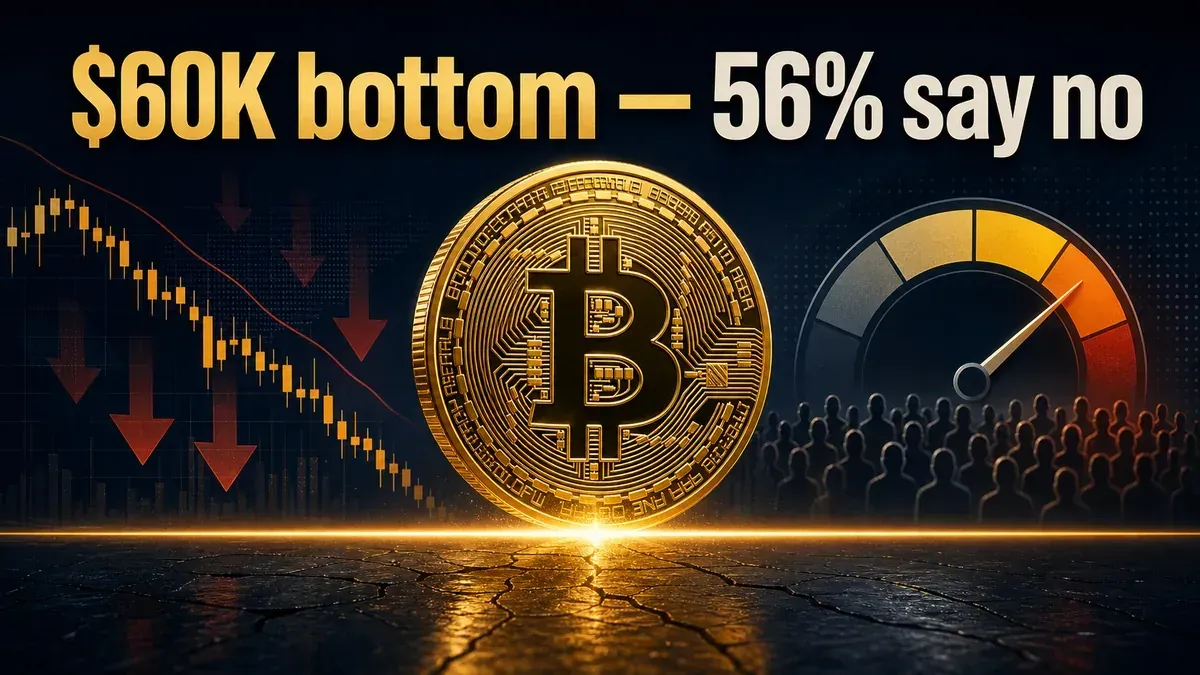
Coinbase CEO Brian Armstrong publicly called a Bitcoin bottom near $60,000, leaning on the four-year cycle and Bitcoin's long-run track record. Then he ran a poll asking followers "Is the bottom in?" — and about 56% said no. This post lays out the exact numbers behind his call, why this drawdown is milder than 2022, and the honest reason a confident bottom call and a skeptical crowd can both be reasonable.
Calling the bottom is the oldest game in markets, and almost nobody wins it cleanly. So it's telling when one of crypto's most prominent CEOs plants a flag at a specific price — and his own audience immediately pushes back. Armstrong's $60,000 call is a genuinely useful case study, not because he's necessarily right, but because the argument for and against it is unusually clean. This is a follow-up to our earlier breakdown of the 2026 Bitcoin bear market and the $100K rebound debate; here we focus on the bottom call itself and what the poll split actually reveals.
Table of Contents
- The Call, by the Numbers
- Why This Drawdown Is Milder Than 2022
- Why the Crowd Disagrees — and Why Both Sides Are Reasonable
The Call, by the Numbers
The specifics matter here, so start with them. In mid-June 2026, Bitcoin touched roughly $59,743 — its lowest level since October 2024 — and about ten days later Armstrong said he believed BTC had "may have bottomed" around $60,000. That low sat roughly 52% below Bitcoin's all-time high of ~$126,000, set in October 2025. As of mid-July 2026, Bitcoin had recovered modestly, trading near $64,000.
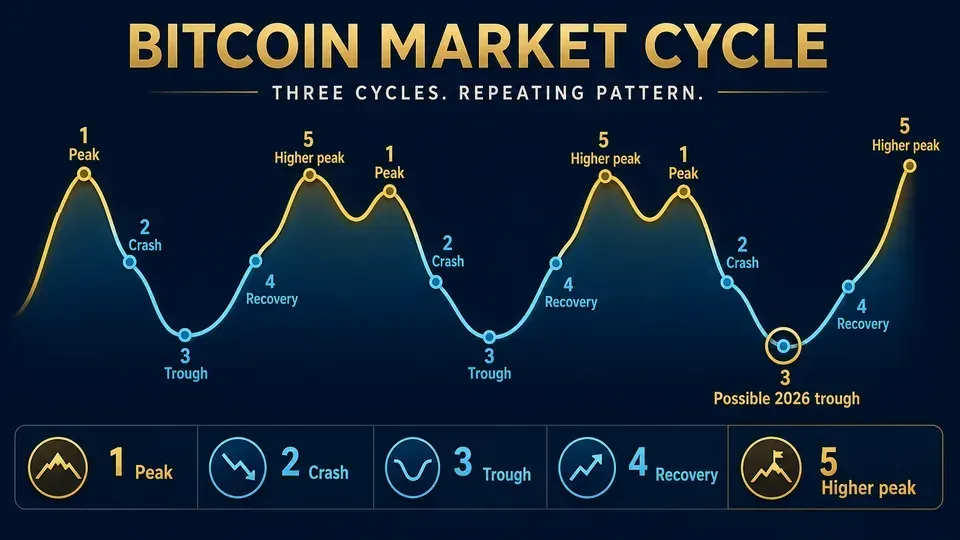
His reasoning rests on two pillars. The first is the four-year cycle — Bitcoin's well-documented pattern of peaking, crashing, bottoming roughly 12–18 months after the peak, and eventually printing a new high. If that rhythm holds, a bottom in the $60,000 zone in 2026 would be broadly consistent with where prior cycles have troughed relative to their peaks. The second is long-run performance: from August 2017 to June 2026, Bitcoin compounded at roughly a 33% CAGR — despite crashing hard in 2018, 2022, and again in 2025–2026. The bull argument in one line: every prior "Bitcoin is dead" moment was, in hindsight, a buying zone.
## Why This Drawdown Is Milder Than 2022
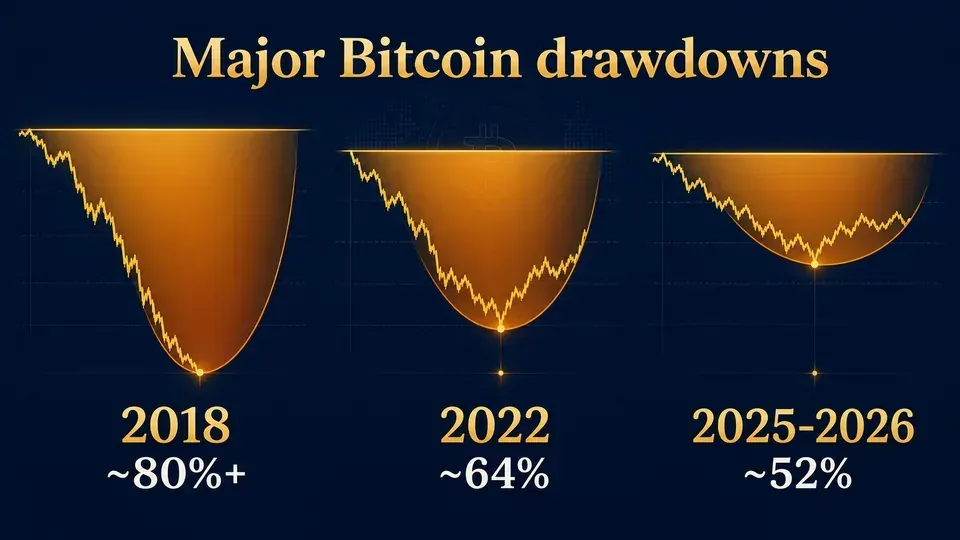
A big part of Armstrong's confidence is that, by Bitcoin's own violent standards, this decline has been relatively contained. Comparing the last three major drawdowns makes the point directly:
| Cycle | Approx. peak-to-trough drop | Character |
|---|---|---|
| 2018 bear market | ~80%+ | Deep, prolonged crypto winter |
| 2022 collapse | ~64% | Contagion, forced liquidations |
| 2025–2026 slump | ~52% | Milder, no systemic blow-up (so far) |
A ~52% drawdown is brutal for anyone who bought the top, but it's meaningfully shallower than the ~64% wipeout of 2022 or the ~80%-plus of the 2018 winter. Armstrong's framing is that a milder correction, without a 2022-style contagion event (no major exchange or lender imploding), is more consistent with a mid-cycle shakeout than the start of a multi-year winter. That's a reasonable read — but "milder so far" is doing quiet work in that sentence, and it's exactly where the skeptics live.
## Why the Crowd Disagrees — and Why Both Sides Are Reasonable
Here's the twist that makes this worth writing about. After his call, Armstrong ran an informal poll: "Is the bottom in?" Roughly 56% said no, about 44% said yes. The CEO of the largest U.S. crypto exchange planted a flag, and a majority of his own engaged audience declined to stand next to it.
That split isn't irrational — it's two valid ways of reading the same chart:
- The bottom-is-in camp (44%): The cycle timing fits, the drawdown is milder than 2022, there's been no systemic collapse, and BTC has already bounced off the low toward $64,000. Historically, doubting the bottom this loudly is what bottoms feel like.
- The lower-lows camp (56%): A bottom is only confirmed in hindsight. Macro pressure (rates, risk-off episodes, geopolitical shocks) can force one more leg down, and "we haven't had a contagion event yet" is not the same as "we won't." Calling a floor while price sits barely above it is a prediction, not an observation.
The honest conclusion is that Armstrong's call is a plausible base case, not a proven one — and the 56% pushback is a healthy reminder that a single confident number from a well-known name is still just one forecast. The cycle argument has worked before, but "it rhymed last three times" is a probability, not a guarantee. For anyone weighing this, the useful takeaway isn't "the bottom is/isn't in" — it's that even the people closest to the market are split roughly down the middle, which is itself the most accurate description of where Bitcoin actually stands.
Frequently Asked Questions
Did Bitcoin actually bottom at $60,000? Unknown — that's the point. Armstrong called it a likely bottom, but a bottom can only be confirmed in hindsight. Bitcoin's June 2026 low was around $59,743, and it has since traded near $64,000.
What is the four-year cycle? It's Bitcoin's observed historical pattern of peaking, crashing, bottoming roughly 12–18 months later, and eventually reaching a new high — loosely tied to its four-year supply-halving schedule. It's a pattern, not a law.
How does this drop compare to 2022? Milder. The 2025–2026 slump is roughly a 52% decline from the ~$126,000 peak, versus about 64% in 2022 and 80%-plus in the 2018 bear market — and without (so far) a 2022-style contagion event.
Why does Armstrong's own poll disagree with him? About 56% of poll respondents said the bottom wasn't in. Both views are defensible: the cycle and milder drawdown support his call, while unconfirmed macro risk supports the skeptics. A called bottom is a forecast, not a fact.
What's Bitcoin's long-term track record? From August 2017 to June 2026, Bitcoin compounded at roughly a 33% annual rate despite major crashes in 2018, 2022, and 2025–2026. Strong long-run returns don't rule out further short-term downside.
Key Takeaways
- Armstrong called a likely Bitcoin bottom near $60,000; the June 2026 low was ~$59,743, ~52% below the ~$126,000 October 2025 peak.
- His case: the four-year cycle and a ~33% CAGR (Aug 2017–June 2026) through multiple crashes.
- This drawdown (~52%) is milder than 2022 (~64%) and 2018 (~80%+), with no systemic collapse so far.
- His own poll split ~56% "no" / 44% "yes" — the market is genuinely divided.
- Treat the call as a plausible base case, not a confirmed bottom — floors are only certain in hindsight.
How this was written: AI assisted with gathering sources and structuring a first draft — fact-checking and final edits were done by a person.
References
- Coinbase CEO Brian Armstrong Says $60,000 Is the Bottom for Bitcoin — The Motley Fool
- Coinbase's Brian Armstrong says Bitcoin may have bottomed at $60,000 — CoinDesk
- Coinbase CEO Brian Armstrong says $60,000 is Bitcoin's bottom — Crypto Briefing
- Bitcoin (BTC) Price: Coinbase Chief Declares $60K Bottom — Market Sentiment Disagrees — Blockonomi


Comments ()