Claude Was Unavailable on Publishing Day. Here’s How I Recovered the Workflow With Codex
Claude Was Unavailable on Publishing Day. Here’s How I Recovered the Workflow With Codex
When the AI agent that normally ran my publishing workflow was unavailable to me, I did not need a heroic prompt or a full rebuild. I needed portable files, explicit rules, verifiable scripts, and a second agent that could read the same workspace.
Table of Contents
- The failure was access, not intelligence
- What made the handoff possible
- How Codex completed the day’s work
- The continuity design I use now
The failure was access, not intelligence
On a scheduled publishing day, Claude was not usable in my workflow. I am intentionally describing that narrowly. I did not diagnose Anthropic’s infrastructure, prove a global outage, or establish why access failed. From an operator’s perspective, the relevant fact was that the tool I normally depended on could not complete the work when I needed it.
The queue still existed:
- practical articles needed research and formatting;
- English Ghost drafts needed to be created;
- a WordPress content workflow had already produced its scheduled output;
- images and publication states needed verification;
- local files had to remain synchronized without leaking credentials.
This is a common weakness in “AI employee” narratives. A workflow can look autonomous while one model, one chat history, or one proprietary memory remains available. Remove that dependency and the supposed system becomes a person trying to reconstruct yesterday’s conversation.
I had one advantage: most of the real state was not inside the conversation.
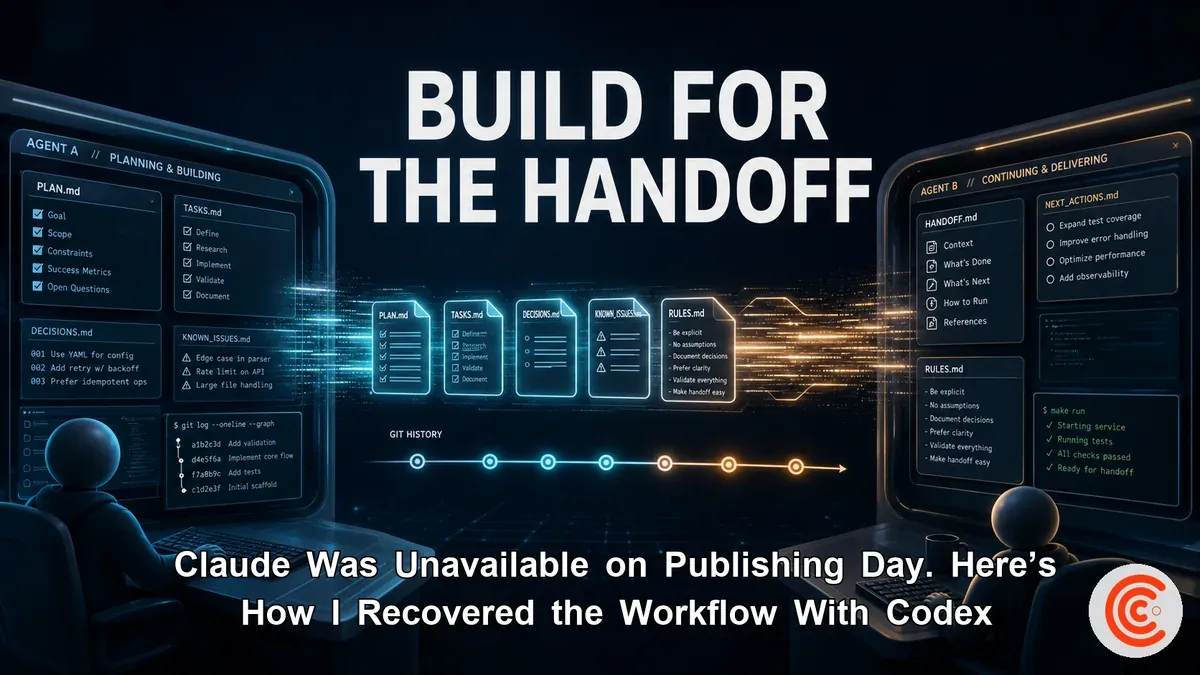
The articles were Markdown files. Publishing rules were local documentation. Scripts performed deterministic conversions and API calls. Secrets lived in ignored files rather than prompts. Git recorded the history. The private dashboard displayed files but was not their only copy.
That architecture turned a vendor interruption into a handoff problem.
## What made the handoff possible
Claude Code and Codex are different products, but both can work against a local project rather than a single pasted document. Anthropic describes Claude Code as a terminal-based tool for delegating coding tasks with visibility and control. OpenAI describes Codex as an agent that can navigate a repository, edit files, run commands, and test its work across app, terminal, IDE, and cloud surfaces.
Those capabilities matter, but portability came from my workspace design.
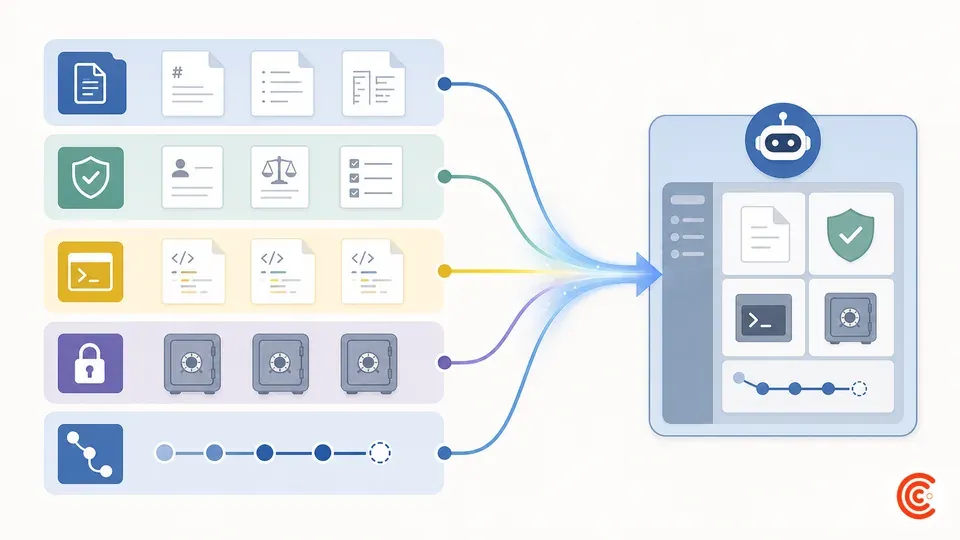
| Portable layer | Why it mattered during the switch |
|---|---|
| Markdown source files | Drafts did not depend on a proprietary editor |
| Versioned rules | The replacement agent could discover current constraints |
| Small publishing scripts | API behavior did not need to be improvised |
| Ignored secret files | Credentials remained available locally without entering the article or chat |
| Git history | Previous changes and reversibility were visible |
| Explicit draft states | The agent could verify that nothing became public accidentally |
The handoff would have been far harder if “memory” meant only a long conversation. Conversation history is useful context, but it is a poor operational database. It can be unavailable, truncated, stale, or tied to one provider.
The most important files were not elaborate. A short job description explained the expected sequence. A writing standard defined frontmatter and source requirements. A publisher script converted Markdown to HTML and created a Ghost draft. A validation script checked that images and post states matched the policy.
This is not model independence in the absolute sense. Both tools are cloud AI products. It is workflow portability: the ability to move work between operators without rebuilding the operating system around it.
How Codex completed the day’s work
I gave Codex access to the same workspace and corrected the scope immediately: this was a one-time recovery, not permission to replace the original schedule permanently.
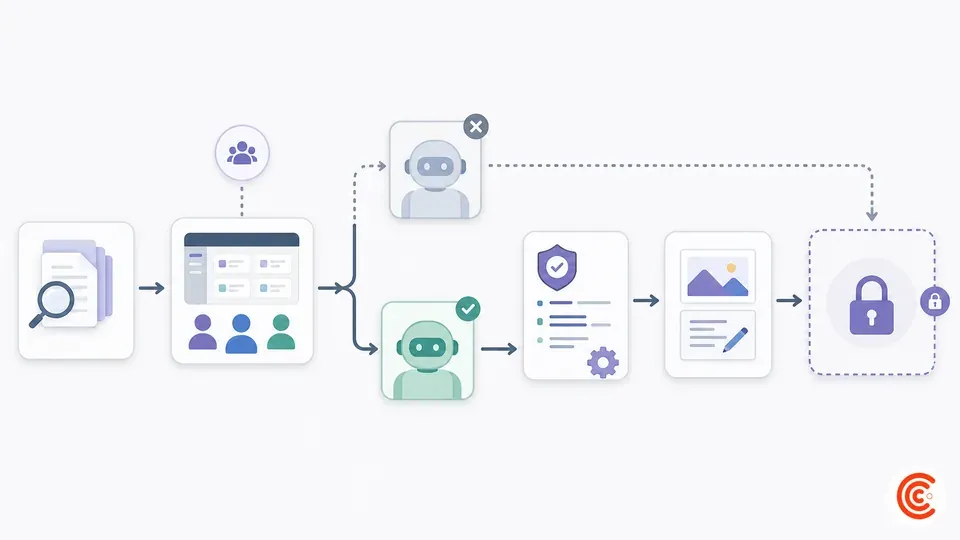
The recovery sequence was:
- Inventory the day’s existing output. This prevented duplicate WordPress posts.
- Read the local publishing rules. The replacement had to follow the existing status model rather than invent one.
- Research missing topics from primary sources.
- Write the missing drafts as files.
- Generate and verify article images.
- Upload Ghost posts as drafts only.
- Check the remote Ghost records. Each post needed a feature image, two body images, and
draftstatus. - Commit only the new content. Unrelated local infrastructure changes remained untouched.
The process exposed a subtle bug. The first Ghost upload successfully stored the images, but the body HTML still contained local relative paths because my placeholder syntax did not match the upload script’s parser. A surface-level “upload succeeded” check would have missed it.
Codex inspected the remote HTML, found the local paths, adjusted the placeholder format, updated the drafts, and checked again. The final state contained remote WebP URLs and remained unpublished.
That is the kind of recovery work I value from an agent: not merely producing text, but following state across local files, conversion logic, an external API, and a final verification.
## The continuity design I use now
The lesson is not “Codex is better than Claude” or the reverse. I have used both. The useful conclusion is that an operating workflow should survive the temporary loss of either.
My continuity rules are now:
Keep durable state in files
Prompts should point to current rules, not contain the only copy of those rules. Content status, source notes, and the expected command sequence belong in versioned files.
Separate secrets from instructions
An agent may call a trusted local script that reads a credential. The credential itself should not appear in Markdown, Git, screenshots, or a conversational handoff.
Make side effects explicit
“Write six drafts” and “publish six posts” are different permissions. My workflow distinguishes local pending, remote draft, and public published states.
Verify the external state
A command returning exit code zero is not enough. Query the final system and inspect the fields that matter.
Maintain a manual escape hatch
I can still open Ghost Admin, edit a Markdown file, or stop the local server myself. Automation should reduce work without making the owner helpless.
Compare tools by workflow fit
Claude Code remains a valid terminal-first option and is included with eligible Claude subscriptions. Codex can work through its desktop app, CLI, IDE, and cloud, with usage included across ChatGPT plans according to current OpenAI documentation. Pricing and limits change, so I would not choose either based on a static table alone.
For a solo operator, the better question is:
Can this tool safely understand my files, execute the checks I need, show me what changed, and hand the workspace back in a state another operator can continue?
Tool and link notes
- Claude Code — official, non-affiliate link.
- OpenAI Codex — official, non-affiliate link.
I found no official public affiliate program that would justify inserting a Claude or Codex tracking placeholder in this article. If that changes, any commercial link should be disclosed and added only after approval.
Frequently Asked Questions
Was Anthropic down globally?
I did not establish that, so this article does not claim it. Claude was unavailable in my specific workflow at the time I needed it.
Did Codex permanently replace Claude?
No. This was a one-time continuity event. The original workflow can resume later.
Which tool produced better writing?
That was not the useful test. The recovery depended on repository access, rule discovery, file editing, tool execution, and remote verification.
What should be portable between AI agents?
Source files, operating rules, tests, safe commands, status definitions, and audit history. Credentials should remain separate.
Is a second AI subscription necessary?
Not for everyone. A manual fallback may be sufficient. The principle is to avoid putting the only usable copy of the workflow inside one vendor’s conversation state.
Key Takeaways
- I experienced a tool-availability problem, not proof of a global outage.
- File-based state made a cross-agent handoff possible.
- Deterministic scripts and remote checks mattered more than a clever recovery prompt.
- The replacement agent caught a successful-looking image upload that still left broken body paths.
- Business continuity should be designed around portable work, not loyalty to one model.
How this was written
This article documents a real one-day handoff from a Claude-centered workflow to Codex. Product descriptions were checked against official Anthropic and OpenAI documentation. The root cause of Claude’s unavailability was not known and is not speculated about. All screenshots remain placeholders so account and workspace details can be removed before publication.
Comments ()